
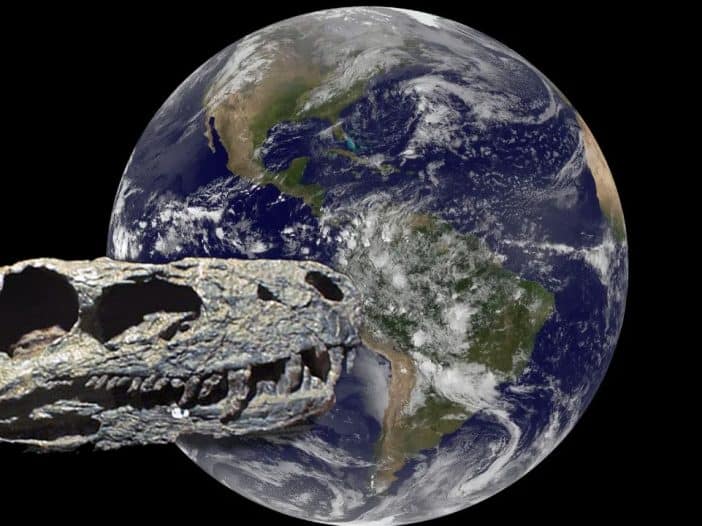
Dinosaurs might feel like pure myth, massive beasts with impossible names, stomping through a world we can barely imagine. But here’s the twist: we know when they lived. Not just “a long time ago” or “before humans”, we know, with scientific precision, that dinosaurs roamed the Earth between 230 and 66 million years ago.
That number isn’t plucked from a hat or based on artistic guesses. It comes from a rich toolkit of scientific techniques, each peeling back a different layer of Earth’s deep history. From rock strata to radioactive isotopes, magnetic flips to molecular traces, scientists use overlapping methods to cross-check and confirm the timeline of life on our planet.
But it wasn’t always that way. When dinosaurs were first discovered, nobody knew just how ancient they were. The bones were mysterious, the worldviews were limited, and early naturalists were still figuring out that extinction was even possible.
This article traces how we cracked the code, from the first fossil classifications in the 1800s to the cutting-edge techniques that let us read time written in stone. It’s the story of how we learned to measure the age of monsters.
Let’s start at the beginning, with a man named Richard Owen, and a word he made up: Dinosauria.
The Birth of Paleontology: Richard Owen and the Dinosaur Idea
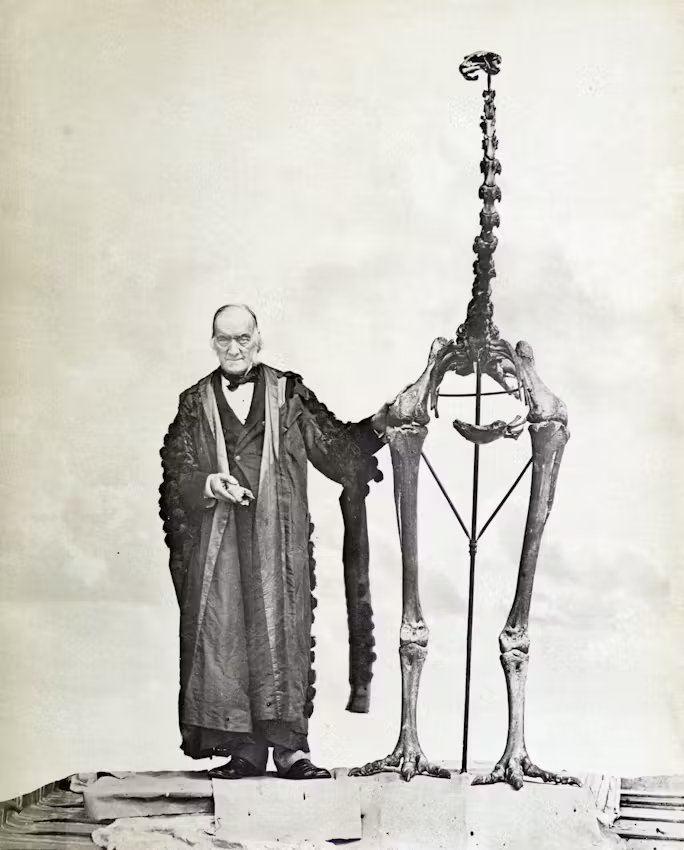
In 1842, British anatomist Richard Owen introduced the world to a new kind of prehistoric creature. Drawing on fragmentary fossil evidence from animals like Megalosaurus, Iguanodon, and Hylaeosaurus, Owen recognized a shared set of features that didn’t fit with any known living reptiles. To describe this distinct group, he coined the term Dinosauria, meaning “terrible lizards.”
At the time, the idea that ancient lifeforms had once ruled the Earth was both thrilling and deeply unsettling. The notion of extinction itself had only recently gained mainstream scientific acceptance, and the emerging fossil record was rewriting humanity’s place in natural history. But while Owen and his contemporaries were pioneers in identifying and classifying dinosaurs, they had no reliable way to tell how old the fossils actually were.
Early paleontology relied almost entirely on comparative anatomy, measuring bones, studying skeletal similarities, and slotting ancient creatures into a Linnaean framework of life. Dinosaurs were seen as oversized reptiles, often imagined as sluggish or monstrous versions of modern lizards. The question of when they had lived was largely left to educated guesswork, often guided by religious assumptions or loose correlations with biblical flood geology.
By the late 1800s, geologists had developed a relative timeline of Earth’s history based on rock layers, but the absolute age of those layers remained a mystery. It wasn’t until the 20th century that scientists would begin to assign real numbers, millions and hundreds of millions of years, to the age of the Earth and its fossils. Owen’s work marked the beginning of dinosaur science, but it would take decades before paleontologists could say with confidence just how ancient these creatures truly were.
Relative Dating: Layers Tell a Story
Before radiometric clocks gave us hard numbers, scientists relied on the rocks themselves to build Earth’s timeline. The key principle? Superposition, the simple idea that in undisturbed sedimentary layers, the oldest rocks are at the bottom, and younger layers pile on top. It’s like reading a vertical history book, page by page, with each stratum recording a chapter in Earth’s story.
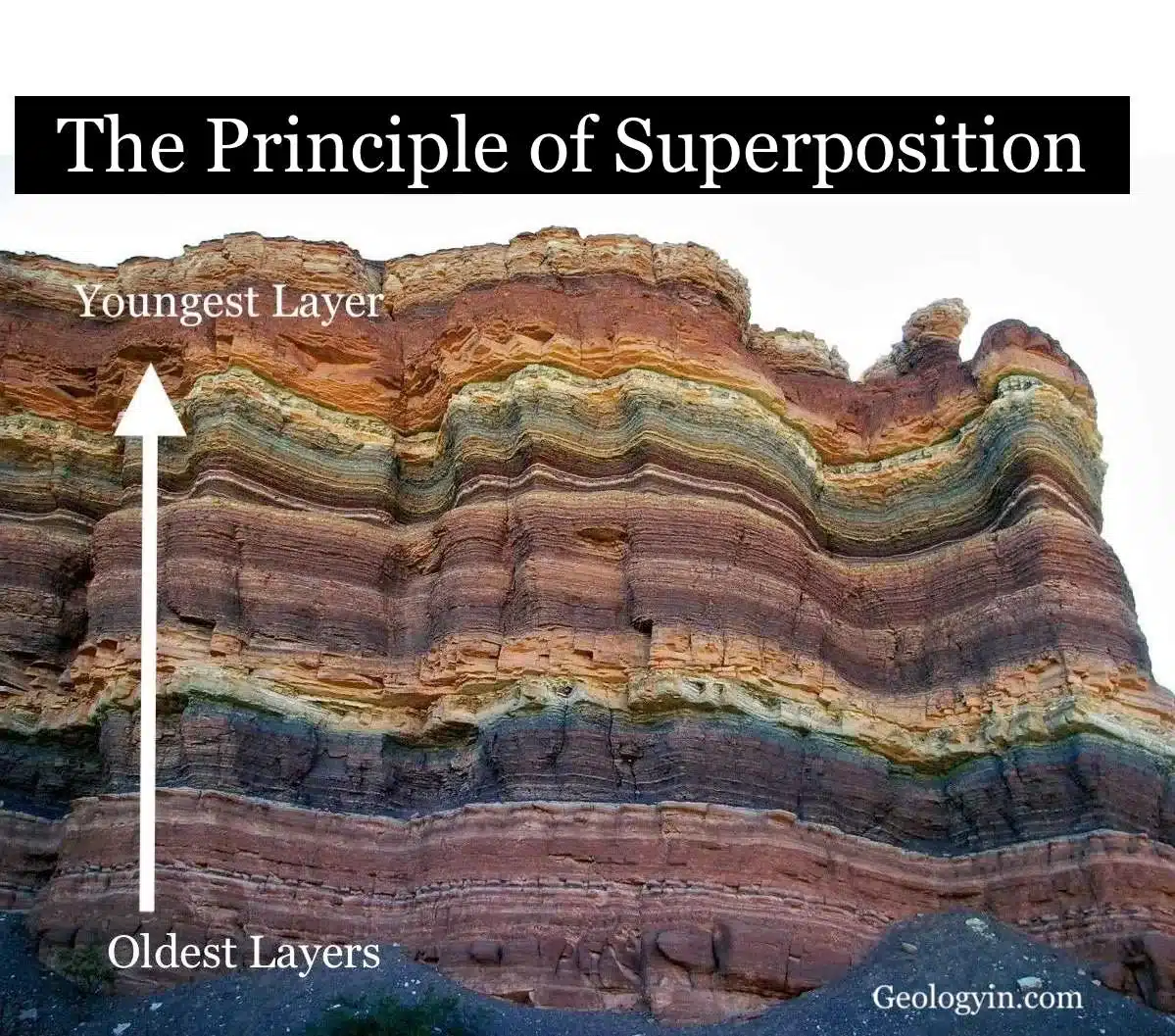
This method, part of the field known as stratigraphy, allowed geologists and paleontologists to understand the relative age of fossils. If you find a fossil in a particular layer, and that layer is sandwiched between two others whose order is known, you can make a solid inference about when that organism lived, at least in relation to other species.
But stratigraphy got a major upgrade with the concept of index fossils. These are species that were widespread but only existed for a relatively short time. If you find a known index fossil, say, a certain type of ammonite or trilobite, you can use it to date the surrounding rock layer, and by extension, any other fossils nearby. It’s fossil time-stamping by association.
Sidebar: Mapping Deep Time
The use of relative dating in the 19th century coincided with the rise of geologic mapping, a revolutionary shift in how people viewed the land beneath their feet. British geologist William Smith created the first detailed geologic map in 1815, charting the layers of rock across England and Wales. He noticed that certain rock layers always contained the same types of fossils, laying the groundwork for fossil correlation and the concept of index fossils. This visual approach to time was a major leap forward, allowing scientists to compare rock sequences across continents and begin constructing the geologic timescale we use today.
Radiometric Dating: Unlocking the Deep Past
For most of paleontology’s early history, scientists could only stack fossils in order, not assign them ages. That changed in the 20th century with the discovery of radiometric dating, a method that finally let researchers attach numbers, actual millions of years, to Earth’s deep past.
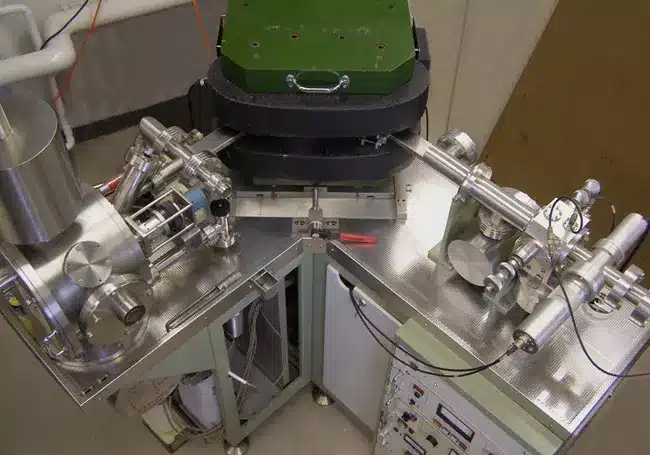
Radiometric dating works by measuring the decay of unstable isotopes in certain types of rock. Isotopes are versions of elements with extra neutrons, and some of them are naturally unstable. Over time, they break down at a predictable rate. For example:
- Uranium-238 decays into Lead-206 over about 4.5 billion years.
- Potassium-40 decays into Argon-40 over about 1.25 billion years.
These decay rates are constant and measurable, like geological clocks. By examining the ratio between parent and daughter isotopes in a mineral, scientists can calculate how much time has passed since that rock crystallized.
Importantly, paleontologists don’t usually date the fossils themselves, organic material doesn’t contain the right isotopes, and fossilization often replaces the original tissue with minerals. Instead, they look at volcanic ash layers or igneous rocks found above and below the fossil-bearing strata. These volcanic layers can be dated with great precision, providing a time window in which the fossils must have formed.
Paleomagnetism: Reading the Planet’s Shifting Fields
Earth’s magnetic field hasn’t always pointed north. Over millions of years, it has flipped polarity, switching north and south in unpredictable cycles. These flips leave behind a geological fingerprint.
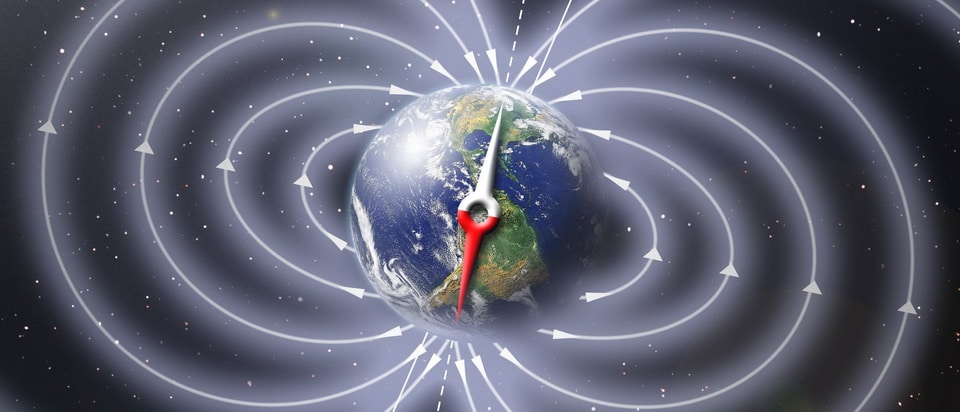
When volcanic rocks or certain sediments cool, iron-bearing minerals align with the magnetic field at that moment. Once locked in place, they act like tiny compass needles frozen in time. This record is known as paleomagnetism.
By studying the magnetic orientation in different layers of rock, geologists can detect these past reversals. Because magnetic flips are global events, the same patterns show up all over the world. That means scientists can match rock layers across continents, even if they’re thousands of miles apart, by comparing their magnetic signature.
Paleomagnetism doesn’t directly date fossils, but it’s a powerful tool for correlating and confirming the age of fossil-bearing rock layers, especially when combined with other methods like radiometric dating.
Fission Track and Thermoluminescence: Niche but Useful
While radiometric dating gets most of the spotlight, other techniques can also help fill in the gaps, especially when volcanic layers aren’t available.
Fission track dating looks at microscopic damage trails left in minerals like zircon or apatite by the spontaneous fission of Uranium-238. These tiny scars accumulate over time and can be counted under a microscope, giving an estimate of a rock’s age.
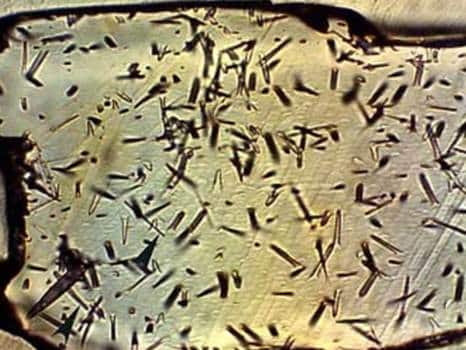
Thermoluminescence dating, on the other hand, measures the light released when minerals are heated. Over time, radiation from the surrounding environment causes electrons to build up in imperfections within the crystal lattice. Heating the sample releases this stored energy as light, which can be measured to determine how long it’s been since the mineral was last exposed to heat or sunlight.
Both methods are mostly used on surrounding sediments or crystalline materials, not the fossils themselves. They’re less precise than radiometric dating but useful when other options are limited, especially in complex or poorly preserved sites.
The Fossil Itself: Clues in Bone Chemistry
Fossils aren’t just bones turned to stone, they’re a chemical record of deep time. During fossilization, the original bone is gradually replaced by minerals from surrounding groundwater. This process, called permineralization, preserves the shape of the bone, but alters its internal chemistry.
While this transformation makes radiometric dating of the fossil itself unreliable (the original isotopes are gone or altered), scientists can still extract information from the trace elements and crystal structures left behind.
Elements like rare earth metals can accumulate in predictable ways depending on the surrounding rock and groundwater conditions. Patterns of recrystallization, how the fossil’s minerals have restructured over time, can also offer clues about the fossil’s relative age and the geologic history of the site.
In rare cases, small fragments of original organic material or soft tissue have been detected in fossils, opening up new avenues for biochemical analysis. But even without original tissue, fossil chemistry can help paleontologists understand the environment, temperature, and even microbial activity from millions of years ago.
In short, while the fossil doesn’t hold a radiometric clock, it’s still a valuable geochemical messenger from a lost world.
A Timeline Set in Stone
From early fossil hunters like Richard Owen to modern geochemists and planetary physicists, the quest to understand dinosaur age has evolved into a truly multidisciplinary science. What began as anatomical comparisons and rough layer-by-layer guesses has become a finely tuned collaboration across geology, chemistry, physics, and biology.
Today, we know with high confidence that dinosaurs lived during the Mesozoic Era, spanning from about 230 million to 66 million years ago. The Triassic gave rise to the first dinosaurs, the Jurassic saw them diversify and dominate, and the Cretaceous brought their reign to a cataclysmic end. These dates aren’t speculative, they’re anchored by radiometric clocks, matched across continents through magnetic fields, and refined with fossil cross-referencing that would have been unimaginable just a century ago.
What’s remarkable is how each method, stratigraphy, radiometric dating, paleomagnetism, and more, works not in isolation but in concert. Together, they allow scientists to cross-check, calibrate, and confirm the deep past with increasing accuracy.
The age of dinosaurs isn’t a guess, it’s a timeline written in the rocks, measured by atomic decay, tracked by planetary magnetism, and confirmed across the globe. The stone doesn’t lie. It just takes science to listen.
